
How to Find Ranking Keywords for SEO
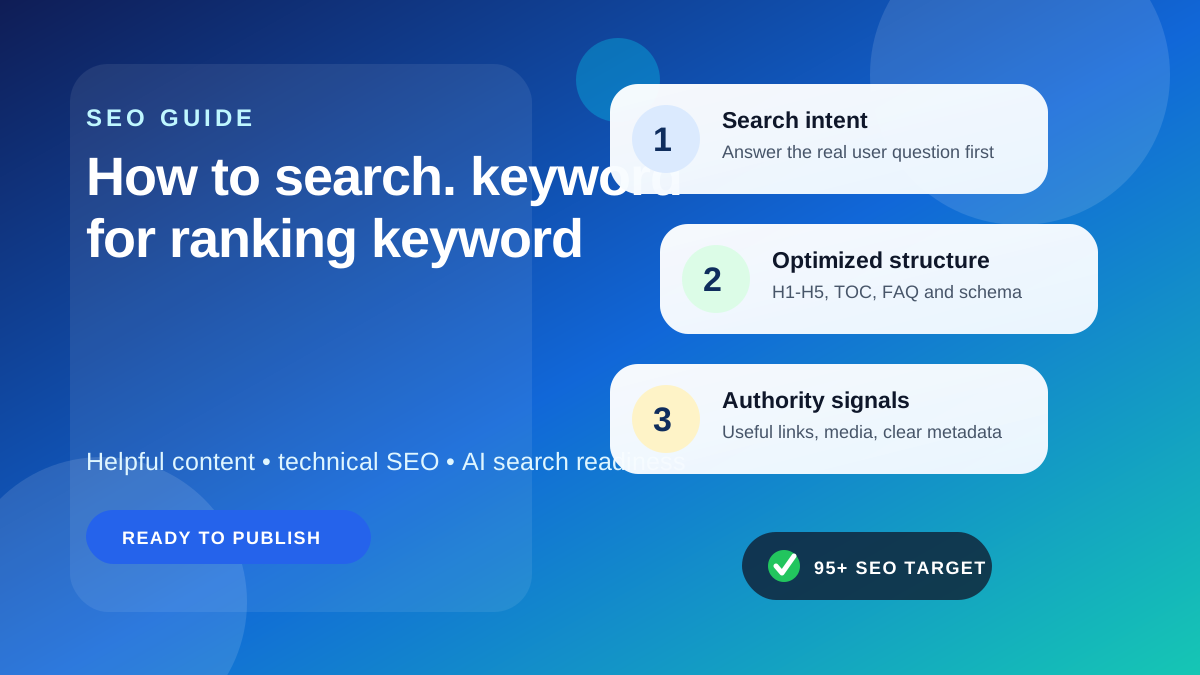
SEO Title: How to Search Keywords for Ranking Keywords: Practical Methods That Work
Meta Title: How to Search Keywords for Ranking
Meta Description: Learn how to search keywords for ranking with practical steps, tools, examples, and SEO tips for beginners and marketers.
URL Slug: how-to-search-keywords-for-ranking
Finding the right keywords is one of the most important parts of SEO, but it is also one of the most misunderstood. Many beginners think keyword research means collecting high-volume phrases and adding them to a page. In reality, ranking-focused keyword research is about understanding search intent, judging competition, spotting realistic opportunities, and mapping the right terms to the right pages.
This guide is written as a practical draft for human review. It is designed to help site owners, bloggers, agencies, and marketers understand how to search keywords for ranking keywords in a way that is useful for both Indian and global audiences. Whether you run a niche blog, an agency website, a local business page, or a guest posting platform, the process below will help you make better keyword decisions.
Where tool features, search volume estimates, pricing, country databases, or product workflows are mentioned, the editor should verify current details before publishing.
What Ranking Keywords Mean
Ranking keywords are the search terms your website already appears for, or the terms you want a specific page to rank for in search engines. When people say they want to “search keywords for ranking,” they usually mean one of these things:
- Find keywords a site already ranks for
- Discover keywords competitors rank for
- Identify new keywords worth targeting
- Match a keyword to a page that can realistically rank
This distinction matters because not every keyword is a good keyword. A term may have high traffic potential, but if the intent does not match your content, conversions may stay low. Another term may have lower volume, but if it matches what your audience wants, it can bring more qualified traffic.
Why Searching the Right Keywords Matters
Good keyword research helps you:
- Build content around real search demand
- Avoid publishing pages nobody is looking for
- Target achievable terms instead of impossible ones
- Improve content structure around user intent
- Find gaps competitors are missing
- Support local, national, or international SEO campaigns
For example, a business targeting “digital marketing” may struggle to rank because the query is broad and highly competitive. But a page built around “digital marketing agency for startups in Bangalore” may be much more realistic and useful if that matches the service offering.
Step-by-Step Process to Search Keywords for Ranking
Below is a practical process you can use whether you are doing SEO for a blog, business website, SaaS company, affiliate site, or guest posting platform.
1. Start with your topic and audience
Before opening any tool, define:
- What your page is about
- Who the reader is
- What problem they want solved
- What action you want them to take
If your audience is SEO beginners, they may search “how to find ranking keywords.” If your audience is agency owners, they may search “how to check competitor ranking keywords.” Same broad topic, different intent.
2. Create a seed keyword list
Seed keywords are the basic terms related to your topic. For this article, seed terms could include:
- ranking keywords
- keyword research
- find competitor keywords
- SEO keyword analysis
- search keywords for ranking
These seed terms help you expand into more specific opportunities.
3. Use Google suggestions
Google itself is one of the best free keyword discovery tools. Try:
- Autocomplete suggestions
- People Also Ask questions
- Related searches at the bottom of results
- Bolded terms within top-ranking pages
These sources often reveal how real users phrase queries in different regions, including India, the UK, the US, and other markets.
4. Check what competitors rank for
Competitor research is one of the fastest ways to find useful keywords. Look at:
- Pages bringing traffic to similar websites
- Keywords competitors rank on page one for
- Long-tail variations you have not covered
- Gaps where your site has no relevant content
If several competitors rank for a keyword cluster and you do not have a page on that topic, it may be a content gap worth exploring.
5. Group keywords by search intent
Do not treat every keyword as equal. Group them by intent:
- Informational: how to find ranking keywords
- Navigational: Ahrefs keyword explorer login
- Commercial: best keyword research tools for SEO
- Transactional: buy keyword tracking tool
If the intent is informational, write a guide. If it is transactional, create a service or product page. Intent mismatch is a common reason pages fail to rank well.
6. Measure difficulty and realism
Many tools provide a keyword difficulty score, but do not rely on the number alone. Manually check:
- Domain strength of top-ranking pages
- Content quality and freshness
- Whether results are blog posts, product pages, videos, or forums
- Presence of large brands dominating the SERP
- Whether search results show local packs, featured snippets, or ecommerce results
A keyword may look easy in a tool but still be hard in practice if the search results are dominated by trusted brands or deeply authoritative pages.
7. Look for long-tail opportunities
Long-tail keywords usually have clearer intent and lower competition. Examples:
- how to search keywords for ranking in google
- how to find competitor ranking keywords free
- best keyword research process for new blog
- how to choose low competition keywords in India
These phrases may bring less traffic individually, but together they can create strong topical relevance and attract qualified visitors.
8. Map keywords to specific pages
Once you collect keywords, assign them to pages carefully. One page should target one main keyword theme with close variations and supporting questions. Avoid creating multiple pages that target nearly identical intent, or you may create keyword cannibalization.
Simple page mapping example
- Main page: how to search keywords for ranking
- Supporting terms: find ranking keywords, keyword research for SEO, search intent keyword selection
- FAQ terms: how to check what keywords competitors rank for, how to find low competition keywords
9. Create content that deserves to rank
Even great keyword research will not help if the content is thin or generic. To improve ranking potential:
- Answer the search clearly in the first section
- Add examples and practical steps
- Include visuals or screenshots if possible
- Address related subtopics naturally
- Show experience and editorial review
10. Track performance and refine
After publishing, monitor:
- Impressions
- Clicks
- Average position
- Queries the page starts showing for
- Engagement and conversions
Google Search Console is especially useful here. Often, a page begins ranking for keyword variations you did not initially target. These can guide updates.
Keyword Types to Target
Short-tail keywords
Broad, high-volume, usually very competitive. Example: “SEO tools.”
Long-tail keywords
More specific, often lower volume, usually easier to rank for. Example: “best free SEO tools for bloggers.”
Question keywords
Useful for blogs, FAQs, and featured snippet opportunities. Example: “how do I find ranking keywords.”
Local keywords
Important for city or region targeting. Example: “SEO consultant in Delhi.”
Commercial investigation keywords
Ideal for comparison content. Example: “Ahrefs vs Semrush keyword research.”
Branded and competitor keywords
Useful for analysis, comparisons, or alternatives content, but should be used carefully and fairly.
Tools You Can Use
Editors should verify tool features and pricing before publishing, as platforms change often.
Free or partially free options
- Google Search Console
- Google autocomplete and related searches
- Google Trends
- Keyword Planner
- Bing Webmaster Tools
Paid SEO tools
- Ahrefs
- Semrush
- Moz
- SE Ranking
- Ubersuggest
What each type is good for
- Search Console: discover keywords you already rank for
- Keyword Planner: broad keyword ideas and ad-oriented estimates
- Google Trends: compare seasonality and regional interest
- Paid suites: competitor analysis, SERP insights, keyword clustering, tracking
How to Evaluate Keywords Before Choosing Them
| Factor | What to Check | Why It Matters |
|---|---|---|
| Search intent | Informational, commercial, transactional, local | Helps match the right content format |
| Relevance | Does it fit your audience and offer? | Irrelevant traffic rarely converts well |
| Difficulty | Tool score plus manual SERP review | Shows whether ranking is realistic |
| Volume | Estimated monthly search demand | Helps prioritize effort |
| Business value | Can it lead to leads, sales, or qualified readers? | Traffic alone is not enough |
| Trend | Stable, seasonal, rising, declining | Useful for planning content timing |
Practical Examples
Example 1: New SEO blog
A new blog may want to rank for “keyword research.” That is usually too broad early on. Better opportunities might include:
- keyword research for beginners
- how to find low competition keywords
- free ways to find competitor keywords
These are more focused and usually easier to support with practical content.
Example 2: Local digital marketing agency
Instead of targeting “SEO services,” a local business can search for:
- SEO services in Mumbai
- local SEO agency in Pune
- SEO expert for small business in India
These keywords better match service intent and location.
Example 3: Guest posting platform
A site like GuestBlogging.info may search and map keywords such as:
- guest posting sites
- submit guest post
- guest blogging for backlinks
- sponsored post placement
- SEO outreach opportunities
Each keyword set can align with a separate category, guide, directory page, or service page.
Keyword Research Method Comparison Table
| Method | Best For | Pros | Limitations |
|---|---|---|---|
| Google autocomplete | Quick idea generation | Free, fast, based on real searches | Limited depth and no full metrics |
| Search Console | Existing ranking keywords | Real site data, useful for optimization | Only helps after your site has impressions |
| Competitor analysis tools | Finding content gaps | Strong insight into proven opportunities | Often paid |
| Keyword Planner | Broad planning | Google source, useful for ad and topic discovery | SEO-specific detail can be limited |
| Manual SERP analysis | Intent and ranking realism | Highly practical, improves decisions | Takes time and experience |
Common Mistakes to Avoid
Targeting only high-volume keywords
High volume often means high competition and broad intent. It is not always the best starting point.
Ignoring search intent
If people want a tutorial and you publish a sales page, ranking may be difficult and engagement may suffer.
Using one keyword on too many pages
This can confuse search engines and weaken page focus.
Overusing exact-match keywords
Natural language matters more than repetition. Write for people first.
Skipping SERP analysis
Never choose a keyword based only on a tool score. Search results reveal what Google prefers.
Forgetting regional differences
Indian and global readers may use different spellings, terms, or intent modifiers. For example, “pricing,” “cost,” and “charges” may each perform differently by market.
Expert Tips for Better Keyword Selection
Use one primary keyword and a small cluster of related terms
This keeps your page focused without sounding forced.
Study the top 10 results before writing
Ask what they cover, what they miss, and how you can be more useful.
Prioritize keywords with clear content angles
If you can explain the topic better than what already ranks, that is often a better sign than raw volume.
Refresh content based on query data
After a page starts getting impressions, update it with missed subtopics and FAQ variations.
Helpful review questions
- Does this keyword match my audience’s actual need?
- Can I create something genuinely better than the current results?
- Does this page support my business or editorial goals?
- Is this keyword too broad for my site authority right now?
Practical rule of thumb
If a keyword is relevant, achievable, and tied to real user intent, it is often worth more than a broader keyword with unclear value.
Final Checklist Before Publishing a Page
- Choose one main keyword theme
- Confirm the search intent manually
- Review the current top-ranking pages
- Add related questions and supporting subtopics
- Write a stronger, more useful answer than competitors
- Use natural headings and internal links
- Check title, meta description, and URL slug
- Track performance in Search Console after publishing
Soft next steps for readers: explore guest posting sites, read SEO guides, submit site details if relevant, or contact the team for sponsored placement opportunities.
FAQs
1. What is the best way to search keywords for ranking?
The best method combines Google suggestions, competitor analysis, keyword tools, and manual SERP review. Use data, but always check intent and ranking realism yourself.
2. How do I find keywords my website already ranks for?
Google Search Console is one of the best starting points. It shows queries that generate impressions and clicks for your pages.
3. How can I find competitor ranking keywords?
You can use SEO tools like Ahrefs or Semrush, or manually review competitor pages and the phrases they target. Editors should verify tool workflows before publishing tool-specific instructions.
4. Are low competition keywords better?
Often yes, especially for new or smaller websites. But they should still be relevant and useful to your audience.
5. Should I target one keyword or many keywords on a page?
Target one main topic with closely related variations and supporting questions. Avoid forcing too many unrelated phrases into one page.
6. How important is search volume in keyword research?
It matters, but it is not everything. Relevance, intent, and realistic ranking potential are often more important.
7. Can I do keyword research for free?
Yes. Google autocomplete, related searches, Search Console, Trends, and Keyword Planner can all help without requiring a large budget.
8. How long does it take to rank for a keyword?
There is no guaranteed timeline. It depends on competition, site authority, content quality, internal linking, backlinks, and search intent match.
9. What is keyword cannibalization?
It happens when multiple pages on your site target the same or very similar intent, making it harder for search engines to know which page to rank.
10. Should local businesses use different keywords than global websites?
Yes. Local businesses should include location modifiers and service intent, while global sites may target broader educational or commercial keyword sets.
11. How often should I update keyword research?
Review it regularly, especially when rankings change, new competitors appear, or search trends shift.
12. Is keyword difficulty always accurate?
No. Tool scores are useful signals, but manual review of the search results is essential.
Internal Linking Suggestions for GuestBlogging.info
- Link to a guide on what is guest blogging
- Link to a page listing guest posting sites by niche
- Link to a resource on how to write a guest post pitch
- Link to an article about SEO basics for beginners
- Link to a post on how backlinks help SEO
- Link to a guide on do-follow vs no-follow links
- Link to a page for submit your site
- Link to a service page for sponsored post placement
- Link to a blog post on content marketing strategies
- Link to a guide on keyword research for bloggers
- Link to an article on common guest posting mistakes
- Link to a category page for SEO guides
Can this strategy help with AI search visibility?
Yes. Clear answers, structured headings, concise summaries, FAQ content, and trustworthy references help both search engines and AI answer systems understand the page.
FAQs
What is the main purpose of How to search. keyword for ranking keyword?
The purpose is to help readers understand the topic clearly, apply the steps correctly, and make better SEO decisions with less confusion.
How often should this SEO content be updated?
Review the page every few months, update outdated tools or examples, and improve sections where search intent or ranking competitors have changed.
Can this strategy help with AI search visibility?
Yes. Clear answers, structured headings, concise summaries, FAQ content, and trustworthy references help both search engines and AI answer systems understand the page.
Need verified guest posting opportunities?
Explore directory listings, compare quality signals, and use safe outreach methods before building backlinks.
Explore Guest SitesTags: AI search optimization, Content Marketing, Google ranking, Guest Blogging, How to search. keyword for ranking keyword, keyword research, SEO guide, technical SEO