
AI in Everyday Life : 9 The Complete Guide to How Artificial Intelligence is Shaping Your World

Introduction: Understanding AI in Everyday Life (Beyond the Sci-Fi Hype)
When you hear “Artificial Intelligence,” what comes to mind? Is it the ominous HAL 9000 from 2001: A Space Odyssey, the charismatic androids of Westworld, or perhaps the helpful Jarvis from the Iron Man films?
For decades, popular culture has painted AI as either a savior or a destroyer of humanity—AI in Everyday Life ,a distant, sentient force of the future.
The reality is both more mundane and far more revolutionary. Artificial Intelligence is already here, and it’s not in the form of a conscious robot. It’s the invisible, intelligent layer woven into the fabric of your daily life.
In its simplest terms, AI is a branch of computer science dedicated to creating machines capable of performing tasks that typically require human intelligence. This includes learning, reasoning, problem-solving, perception, and understanding language.
Most of the AI we interact with today is known as Narrow AI (or Weak AI). It’s designed to excel at a specific, narrow task.
The algorithm that recommends your next Netflix binge is a master of recommendation, but it can’t navigate your car or diagnose an illness. That’s a different Narrow AI.
The dream of Artificial General Intelligence (AGI)—a machine with the full cognitive abilities of a human—remains a topic for research labs and science fiction.
This guide will pull back the curtain on the AI that is already here. We will explore how it works quietly in the background, powers your home, entertains you, keeps you healthy, and gets you where you need to go. This is not a future forecast; this is your life, right now, powered by AI.
The Invisible Assistant: How AI Works in the Background of Daily Life
You don’t need to have a conversation with a robot to be using AI. From the moment you wake up to the time you go to sleep, you are interacting with sophisticated algorithms.
At the core of modern AI are two key concepts: Machine Learning (ML) and Deep Learning.
- Machine Learning is the process of “training” a computer model by feeding it vast amounts of data. The model identifies patterns and makes predictions or decisions without being explicitly programmed for every single rule. For example, by analyzing millions of cat photos, an ML model can learn to identify a cat in a picture it has never seen before.
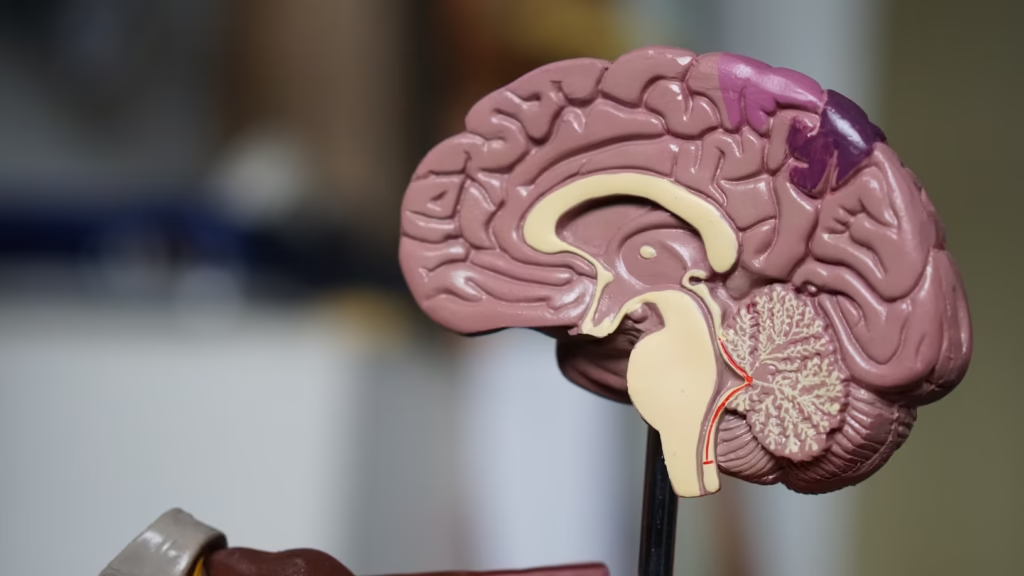
- Deep Learning is a more complex subset of machine learning, inspired by the structure of the human brain (using artificial neural networks). It’s what enables the most advanced capabilities, like real-time language translation and the facial recognition used to unlock your phone.

Think about your morning routine. You check your phone and see a notification about your 8:00 AM meeting, with a predicted travel time. That’s AI analyzing real-time traffic data.
You open your email, and the spam folder has already caught three phishing attempts. That’s AI recognizing malicious patterns. You scroll through a news app, and the headlines are curated to your interests. Again, AI in Everyday Life.
It’s your silent, hyper-efficient personal assistant, working 24/7 to streamline your world. Let’s look at where this assistant is most active.
AI at Home: Smart Speakers, Appliances, and Security
The modern smart home is essentially an AI-powered ecosystem. These devices are moving from simple command-and-response to proactive, context-aware assistance.
- Smart Speakers & Voice Assistants: Amazon Alexa, Google Assistant, and Apple’s Siri are the most common gateways to home AI. They use Natural Language Processing (NLP) to understand your commands. But they are getting smarter. They can learn your routines (“Good morning” triggers the news, turns on the lights, and starts the coffee maker) and even distinguish between different voices in the household to provide personalized responses.
- Smart Appliances: Your refrigerator with a camera inside can use computer vision to track your groceries and suggest recipes based on what’s about to expire. Robotic vacuums like the iRobot Roomba use AI to map your home for efficient cleaning, learning to avoid obstacles like pet toys.
- Home Security: AI has revolutionized home safety. Systems like Google Nest and Ring use facial recognition to tell you if a person at your door is a family member, a stranger, or a frequent delivery driver. They can also differentiate between a person, a car, and an animal, drastically reducing false alarms.

(Internal Link: Read our in-depth review of the best AI-powered home security systems.)
(External Link: [Link to a reputable source like Wired or The Verge on the evolution of voice assistants])
AI in Communication & Entertainment: Social Media, Streaming, and Gaming
This is where most people have their most visible and personalized interactions with AI in Everyday Life.
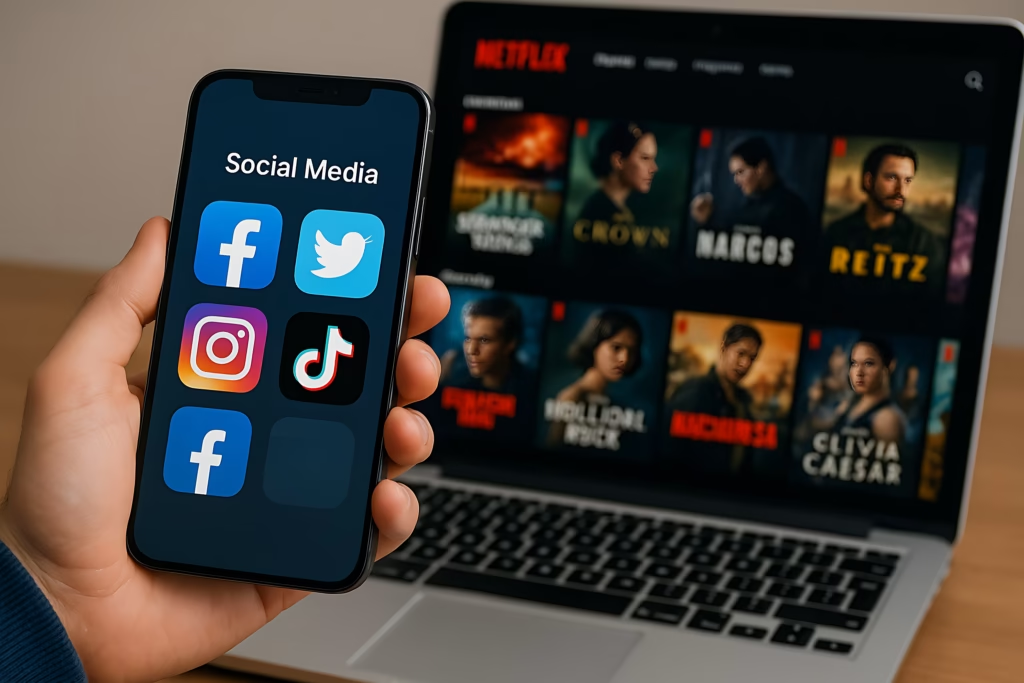
- Social Media: The feeds on Facebook, Instagram, TikTok, and Twitter are not chronological. They are meticulously curated by AI algorithms designed to maximize your engagement. By analyzing every like, share, comment, and even how long you linger on a post, the AI builds a detailed profile of your interests to keep you scrolling. It’s also the technology behind facial-tagging suggestions and targeted advertising.
- Streaming Services: Netflix, Spotify, and YouTube are AI powerhouses. Their recommendation engines are responsible for the majority of content consumption. By comparing your viewing/listening habits with millions of other users (a technique called collaborative filtering), these platforms can surface shows, movies, and music you’re likely to enjoy. The “Top Picks for You” and “Discover Weekly” playlist are pure AI magic.
- Gaming: AI creates more immersive and challenging experiences. Non-Player Characters (NPCs) now have more realistic behaviors, using AI to navigate complex environments and react dynamically to the player’s actions. In game development, AI is used to generate massive, detailed worlds and even assist in creating artwork and dialogue.
AI for Productivity & Learning: From Email Assistants to Personalized Education
AI in Everyday Life is not just for entertainment; it’s a powerful tool for getting things done and expanding your knowledge.
- Productivity Tools:
- Email: Gmail’s “Smart Reply” suggests quick responses, and its “Smart Compose” feature finishes your sentences as you type. It also prioritizes your inbox, separating important messages from promotions and social updates.
- Scheduling: Tools like x.ai and calendar scheduling features use NLP to read emails and automatically schedule meetings.
- Document Creation: Grammarly and Microsoft Editor use AI to go beyond simple spell-check, offering advanced grammar, tone, and clarity suggestions.
- Personalized Learning: Platforms like Khan Academy and Duolingo use AI to create adaptive learning paths. If a student struggles with a math concept, the system provides additional exercises and resources. If they ace it, it moves them forward, ensuring efficient and personalized education. AI can also grade assignments and even provide feedback on essay structure.

(Internal Link: Check out our top 5 AI tools to boost your productivity in 2024.)
(External Link: [Link to a study on the efficacy of AI in personalized learning])
AI in Health & Wellness: Fitness Trackers, Diagnostic Tools, and Mental Health Apps
Perhaps one of the most impactful areas of AI in Everyday Life development is in health and wellness, where it’s augmenting human expertise to save lives and improve well-being.
- Fitness Trackers: Wearables from Fitbit, Apple, and Garmin use AI to analyze your heart rate, sleep patterns, and activity levels. They don’t just collect data; they interpret it, providing insights like your “readiness score” for the day or alerting you to potential health anomalies like an unusually high resting heart rate.
- Medical Diagnosis: AI is exceptionally good at analyzing complex medical images. Algorithms can now detect diseases like cancer, diabetic retinopathy, and neurological conditions from X-rays, MRIs, and CT scans with an accuracy that often rivals or even surpasses human radiologists. This acts as a powerful second opinion, helping doctors diagnose diseases earlier and more accurately.
- Mental Health Apps: Apps like Woebot and Wysa use AI-powered chatbots to provide Cognitive Behavioral Therapy (CBT) techniques and emotional support. While not a replacement for human therapists, they offer accessible, on-demand help and can be a crucial first step for those seeking mental health resources.
AI in Transportation & Travel: Navigation, Ride-Sharing, and Smart Cars
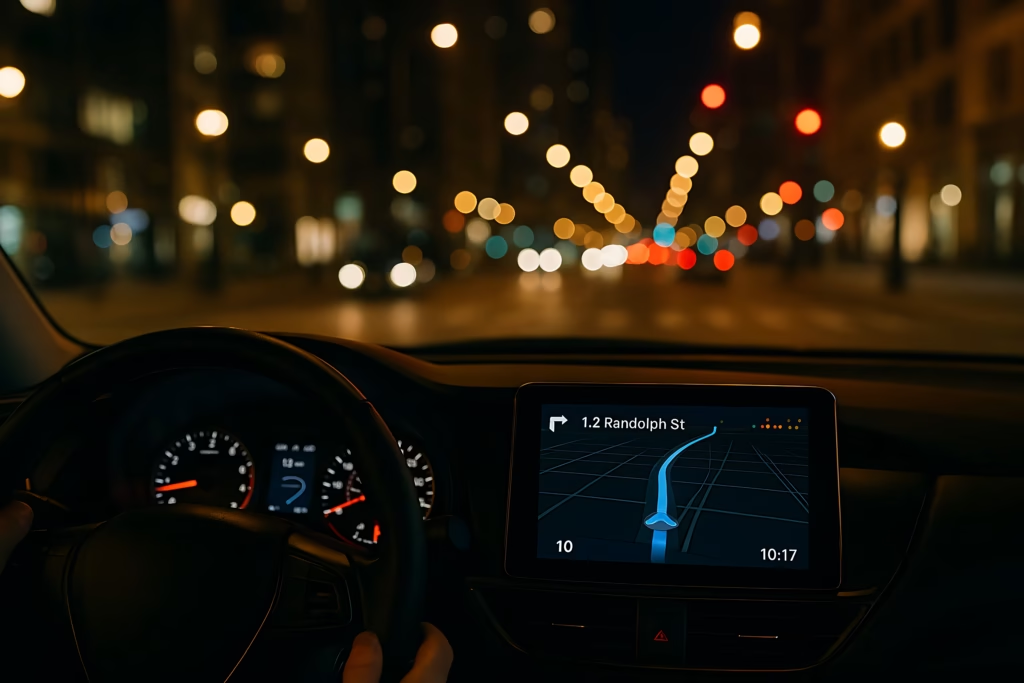
Getting from A to B has been completely transformed by AI- AI in Everyday Life.
- Navigation & Maps: Google Maps and Waze are real-time AI systems. They process data from millions of users to predict traffic, calculate the fastest route, and even suggest the best time to leave for an appointment. They learn from collective behavior to understand typical traffic patterns and react instantly to accidents or road closures.
- Ride-Sharing: Uber and Lyft use complex AI algorithms to set dynamic pricing (surge pricing) based on real-time supply and demand. Their matching systems efficiently connect riders with the nearest driver to minimize wait times for everyone.
- Autonomous Vehicles: Self-driving cars from companies like Tesla and Waymo are the ultimate expression of AI in transportation. They fuse data from cameras, radar, and LIDAR to create a 360-degree view of the world. The AI then makes millions of calculations per second to navigate roads, avoid obstacles, and obey traffic rules.
AI in Creativity & Personal Projects: Music, Art, and Writing Tools
A common fear is that AI in Everyday Life will replace human creativity. The current reality is that it’s becoming a powerful collaborator and muse.
- AI Art Generators: Tools like Midjourney, DALL-E, and Stable Diffusion have exploded in popularity. By using simple text prompts (e.g., “an astronaut riding a horse in photorealistic style”), users can generate stunning, original images in seconds. These tools are being used for concept art, marketing materials, and personal projects.
- Music Composition: AI platforms like AIVA and Amper Music can compose original music in specific genres for use in videos, games, and advertisements. They help musicians brainstorm new melodies and chord progressions.
- Writing Assistants: Beyond Grammarly, advanced tools like Jasper AI and Copy.ai can help generate marketing copy, blog post ideas, and even full-length articles based on a few input sentences. They are used to overcome writer’s block and scale content creation.

The Responsible Use of AI in Everyday Life : Addressing Privacy, Bias, and Ethical Considerations
The power of AI comes with significant responsibilities and challenges that we must address as a society – AI in Everyday Life.
- Data Privacy: AI systems are hungry for data—your data. The personalized experiences we enjoy come at the cost of our personal information being collected, stored, and analyzed. It’s crucial to understand what data you’re sharing and how it’s used. Transparency from companies and robust data protection laws like the GDPR are essential.
- Algorithmic Bias: An AI model is only as good as the data it’s trained on. If that data contains human biases, the AI will learn and even amplify them. We’ve seen this in hiring algorithms that discriminated against women and facial recognition systems that performed poorly on people of color. Actively working to create diverse datasets and audit algorithms for fairness is a critical ongoing effort.
- Job Displacement: As AI automates routine tasks, certain jobs will inevitably change or become obsolete. The challenge is to manage this transition by focusing on reskilling and upskilling the workforce, preparing humans for the more creative, strategic, and empathetic roles that AI cannot fulfill.

The Future of AI in Everyday Life : Emerging Trends and What’s Next
The pace of AI innovation is not slowing down. Here’s what we can expect on the horizon:
- Generative AI Goes Mainstream: The ability of AI to generate not just images and text, but also video, 3D models, and complex computer code, will become more accessible, revolutionizing fields like filmmaking, software development, and design.
- The Embodied AI: AI will move beyond screens and into physical robots designed to assist in homes (elder care, complex chores) and warehouses.
- Hyper-Personalization: AI will enable products and services tailored to your individual biology and preferences, from personalized nutrition plans and medicine to custom-manufactured clothing and furniture.
- AI and Climate Change: AI will play a pivotal role in combating climate change by optimizing energy grids in real-time, improving climate modeling, and accelerating the discovery of new materials for carbon capture.
The relationship between humans and AI in Everyday Life will become even more deeply integrated, moving from a tool we use to a collaborative partner in many aspects of our lives.

Conclusion & Key Takeaways
The age of Artificial Intelligence is not a distant future; it is our present reality. It has quietly integrated itself into our homes, our pockets, and our daily routines, offering unprecedented convenience, personalization, and capability.
To recap, here are the key takeaways:
- AI is Here and Now: It’s not sentient robots; it’s powerful, specialized software that learns from data.
- It’s Mostly Invisible: The most common form of AI is a background process, streamlining your life without you even noticing.
- It’s a Powerful Tool for Good: From saving lives through early disease detection to personalizing education, AI in Everyday Life’s potential for positive impact is immense.
- Creativity is Evolving, Not Dying: AI in Everyday Life – AI is emerging as a collaborative tool that can augment and enhance human creativity in art, music, and writing.
- Responsibility is Paramount: We must proactively address challenges related to data privacy, algorithmic bias, and the future of work to ensure AI develops ethically and benefits all of humanity.
The goal is not to create a world run by AI in Everyday Life , but to build a future where human intelligence and artificial intelligence work in synergy, solving complex problems and unlocking new possibilities for creativity and growth. The future is not about humans versus machines; it’s about humans with machines.
What are your thoughts on the role of AI in Everyday Life in our daily lives? Are you excited or concerned? Share your perspective in the comments below!
FAQs
What is the main purpose of AI in Everyday Life : 9 The Complete Guide to How Artificial Intelligence is Shaping Your World?
The purpose is to help readers understand the topic clearly, apply the steps correctly, and make better SEO decisions with less confusion.
How often should this SEO content be updated?
Review the page every few months, update outdated tools or examples, and improve sections where search intent or ranking competitors have changed.
Can this strategy help with AI search visibility?
Yes. Clear answers, structured headings, concise summaries, FAQ content, and trustworthy references help both search engines and AI answer systems understand the page.
Need verified guest posting opportunities?
Explore directory listings, compare quality signals, and use safe outreach methods before building backlinks.
Explore Guest SitesTags: AI search optimization, Content Marketing, everyday life artificial intelligence shaping, Google ranking, Guest Blogging, keyword research, SEO guide, technical SEO